The piano is one of the most recognizable and popular musical instruments in the world. At first glance, its operation seems simple: we press a key and hear a tone. However, inside the piano or keyboard, an extremely precise mechanical process is triggered at that moment.
When a pianist presses a key, the mechanics move a felt-covered hammer that strikes one or more strings. The strings vibrate, the resonant plate amplifies their vibrations, and the resulting sound spreads through the instrument's case.
It is precisely because of the connection between human touch, mechanics, and acoustics that the piano is such a special instrument. It combines wood, metal, felt, strings, precise mechanical parts, and the pianist's feel.
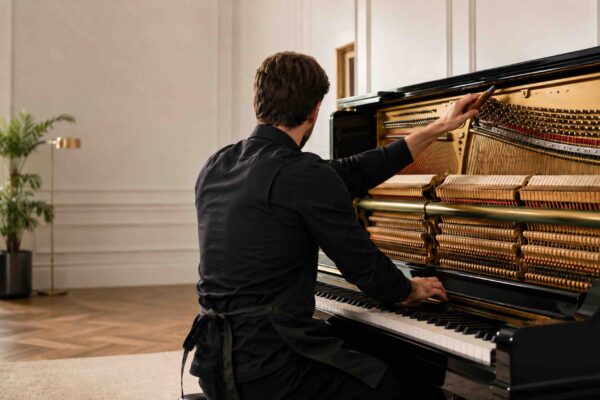
V Japan Piano Center We encounter pianos and keyboards every day – in selecting and selling instruments, tuning, regulating mechanics, intonation, servicing, preparing concert instruments, and challenging transports.
In the following, we will explain in an understandable way:
- how an acoustic piano works,
- what happens when we press a key,
- what is the difference between a piano, a grand piano, and a digital piano,
- why does a modern piano have 88 keys,
- what do dynamics and touch mean,
- what is the difference between tuning and voicing,
- why does each piano sound slightly different.
How does an acoustic piano work?
An acoustic piano works mechanically. When a pianist presses a key, a lever system inside the instrument is triggered, moving the hammer. This hammer strikes a string or multiple strings, causing them to vibrate, and the soundboard amplifies the vibrations and transforms them into a full, resonant sound.
The sound is therefore not produced electronically, but completely naturally. Each tone results from mechanical movement and string vibration. This is why the acoustic piano is such a living instrument – it responds to the strength, speed, and manner of key pressing.
The sound of an acoustic piano is therefore not produced electronically, but is the result of:
- key movement,
- piano action operation,
- hammer strike,
- string vibration,
- transfer of vibrations to the soundboard,
- sound spreading through the instrument's body.
An acoustic piano directly responds to the speed and manner of key pressing. If we press the key slowly and gently, the tone will be quieter and softer. If we press it quickly and decisively, the hammer will strike the strings with greater speed, and the tone will be louder and more pronounced.
This direct connection between touch and sound allows the pianist a very wide range of musical expression.
What are the most important parts of a piano?
An acoustic piano is made up of thousands of individual components. The most important include:
Keys
The pianist controls the instrument's mechanics with them. A key is not just a 'switch', but the first link in a system of mechanical levers.
Mechanics
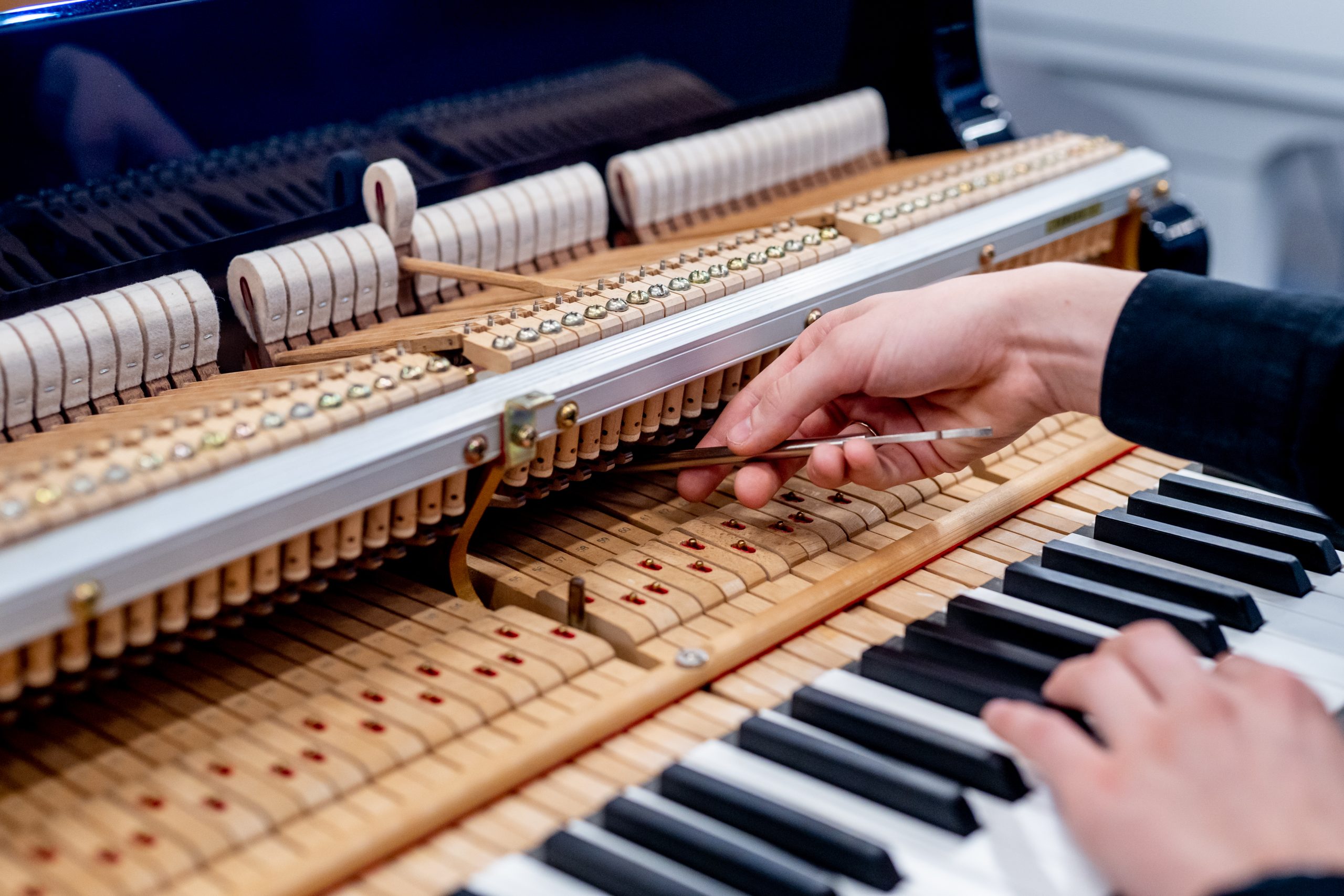
This refers to a precise system of wooden parts, axles, levers, springs, felt, and other elements that transfer the movement of the key to the hammer.
Hammers
Hammers are covered with special felt and strike the strings. Their shape, density, and condition greatly affect the tone color.
Strings
Strings create the fundamental vibrations. In the bass register, they are thicker and often wrapped with copper wire, while in the middle and high registers, they are thinner.
Dampers
Dampers rest on the strings and prevent uncontrolled ringing. When a key is pressed, the corresponding damper lifts away.
Soundboard
The soundboard amplifies the vibrations of the strings and transforms them into the full sound we hear in the room.
Cast iron frame
The frame bears the overall tension of the strings and provides structural stability to the instrument.
Pedals
Pedals affect the duration, color, and volume of the sound. The most commonly used is the right or sustain pedal, which lifts the dampers and allows for longer resonance of the notes.
All these parts must work in harmony. Even small deviations in the settings of the mechanics can affect the feel of the keys, the repetition of notes, dynamics, and the overall playability of the instrument.
What happens when we press a piano key?
When a key is pressed, a chain of precisely coordinated mechanical movements is triggered. The front part of the key descends, while the back part rises and activates the mechanism.
The process can be simply described as follows:
- The pianist presses the key.
- The key activates a system of mechanical levers.
- The mechanism 'sends' the hammer towards the strings.
- The damper moves away from the corresponding strings.
- The hammer strikes the strings.
- The hammer immediately retracts after the strike.
- The strings vibrate freely.
- The vibrations are transmitted to the soundboard.
- The soundboard amplifies the sound and spreads it throughout the space.
When the pianist releases the key, the damper typically returns to the strings and stops their vibration. An exception is playing with the right pedal pressed, where the dampers remain lifted even after the key is released.
The entire process happens in a fraction of a second. During fast playing, it must be repeated several times in succession, accurately and evenly.
Why is piano mechanism regulation important?
Regulation means professional adjustment of the mechanism, keys, hammers, and dampers so that the instrument operates evenly and reliably.
If the mechanism is not properly regulated, the following issues may arise:
- keys are too hard or too light,
- individual keys have different resistance,
- keys or hammers get stuck,
- the repetition of tones is slow,
- some tones do not respond when played softly,
- the hammer does not strike the strings correctly,
- the tone dampers do not stop completely,
- the dynamics are uneven.
With a quality and well-regulated instrument, the pianist feels a direct connection between their fingers and the sound produced. The keys respond predictably, allowing for better technique, greater control, and more natural musical expression.
Regulation is not the same as tuning. In tuning, the technician adjusts the pitch of the notes, while in regulation, the mechanical operation of the instrument is adjusted.
What is the difference between a piano, a grand piano, and a digital piano?
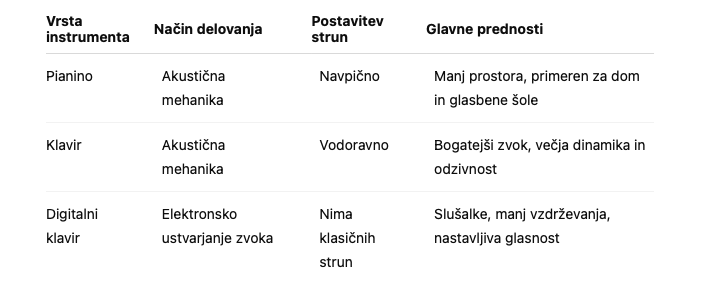
In everyday speech, we often use the word piano for almost all keyboard instruments. However, there are significant structural and sound differences between a piano, a grand piano, and a digital piano.
What is a piano?
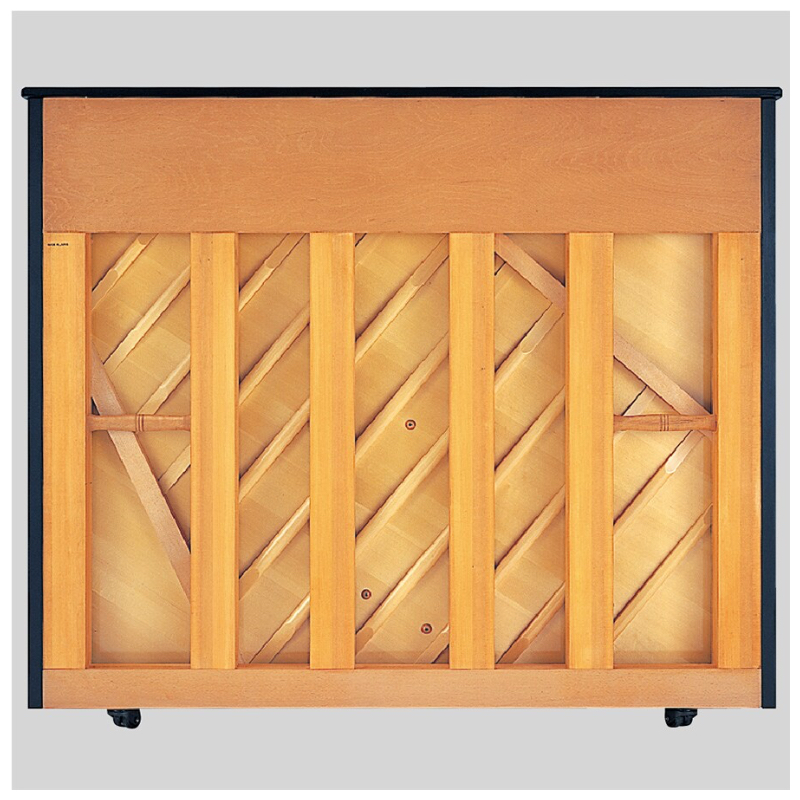
A piano is an upright acoustic instrument where the strings and soundboard are positioned vertically.
Because it takes up less space than a grand piano, it is the most common choice for:
- homes,
- music schools,
- classrooms,
- practice spaces,
- smaller studios.
A quality piano can offer very good sound, appropriate dynamics, and a good feel of the keys, so it is not only intended for beginners. Higher and more structurally refined pianos are also suitable for demanding pianists.


What is a grand piano?
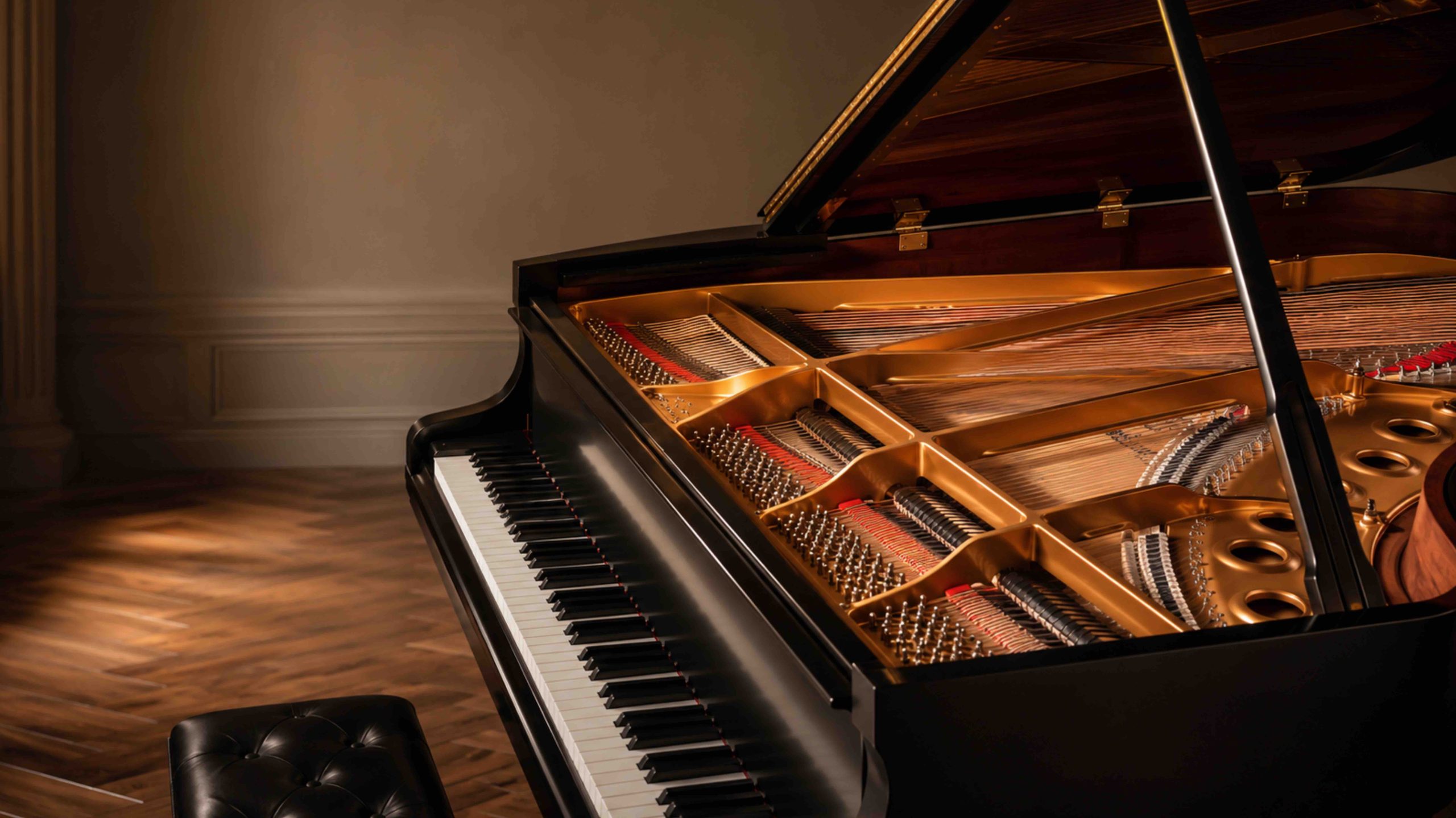
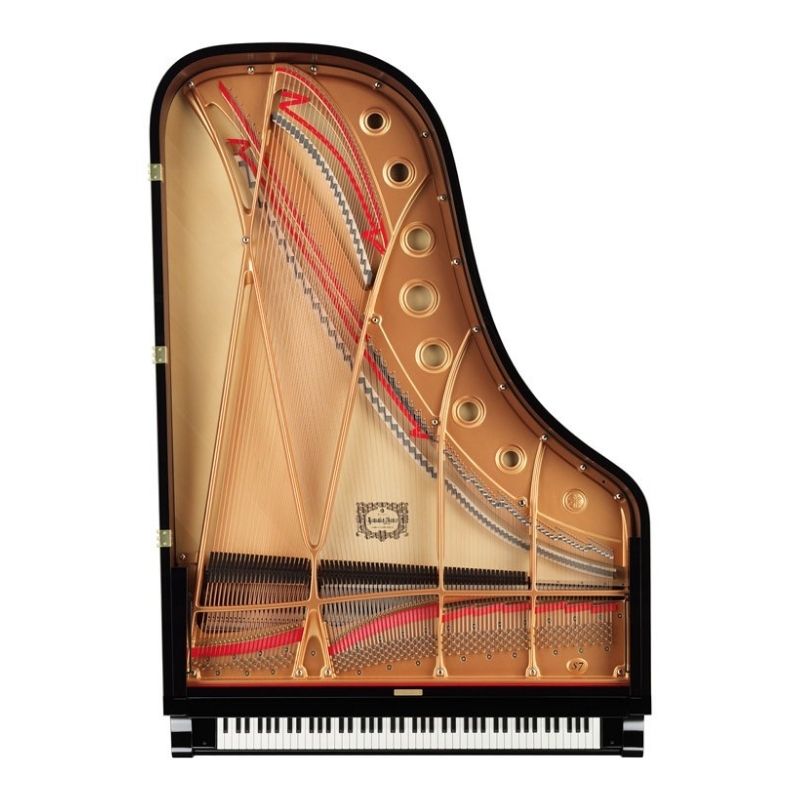
A grand piano is an acoustic instrument with horizontally positioned strings and a soundboard.
Due to longer strings, a larger body, and a different mechanism design, it typically offers:
- a wider dynamic range,
- a richer and longer tone,
- faster note repetition,
- more direct response,
- greater control during demanding playing.
Pianos are used in concert halls, music schools, studios, cultural institutions, and by advanced pianists at home.
The size of the piano significantly affects its character. Larger concert pianos have longer bass strings and a bigger soundboard, allowing them to produce deeper bass, more power, and a wider color palette.

What is a digital piano?
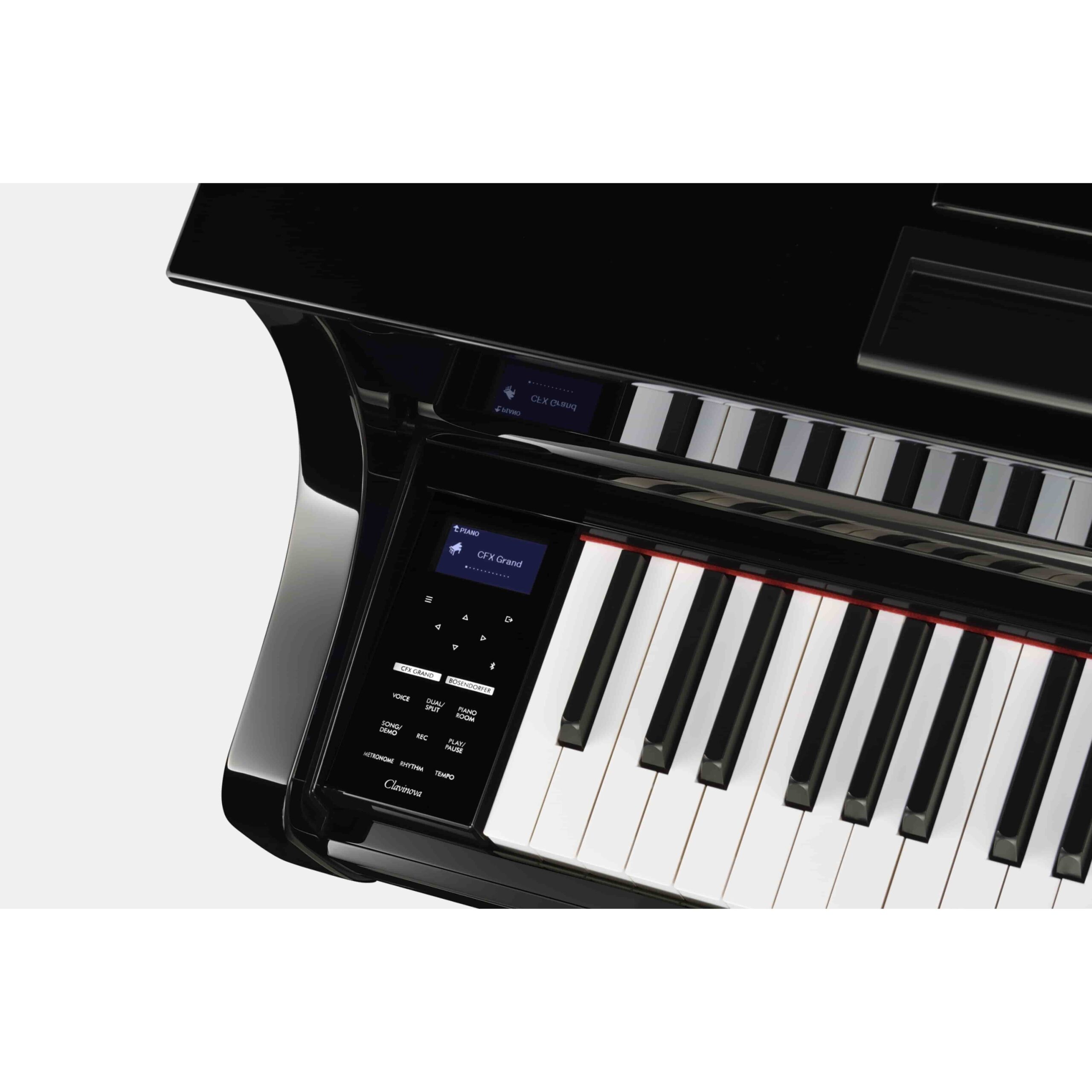
A digital piano is an electronic instrument that mimics the sound and feel of an acoustic piano or grand piano. Colloquially, it is often referred to as an electric piano, although the term digital piano is more accurate for most modern instruments.
Quality digital pianos have:
- 88 weighted keys,
- graded key action,
- the sound of a recorded or digitally modeled acoustic piano,
- the ability to play with headphones,
- adjustable volume,
- a metronome and additional learning features,
- the option to connect to a computer or mobile devices.
A digital piano is a practical solution for apartments, evening practice, beginners, and users who need a portable instrument.
Despite the advancement of digital technology, the feel of acoustic mechanics remains different, as in an acoustic instrument the pianist directly controls the hammers that physically strike the strings.


How did the piano develop?
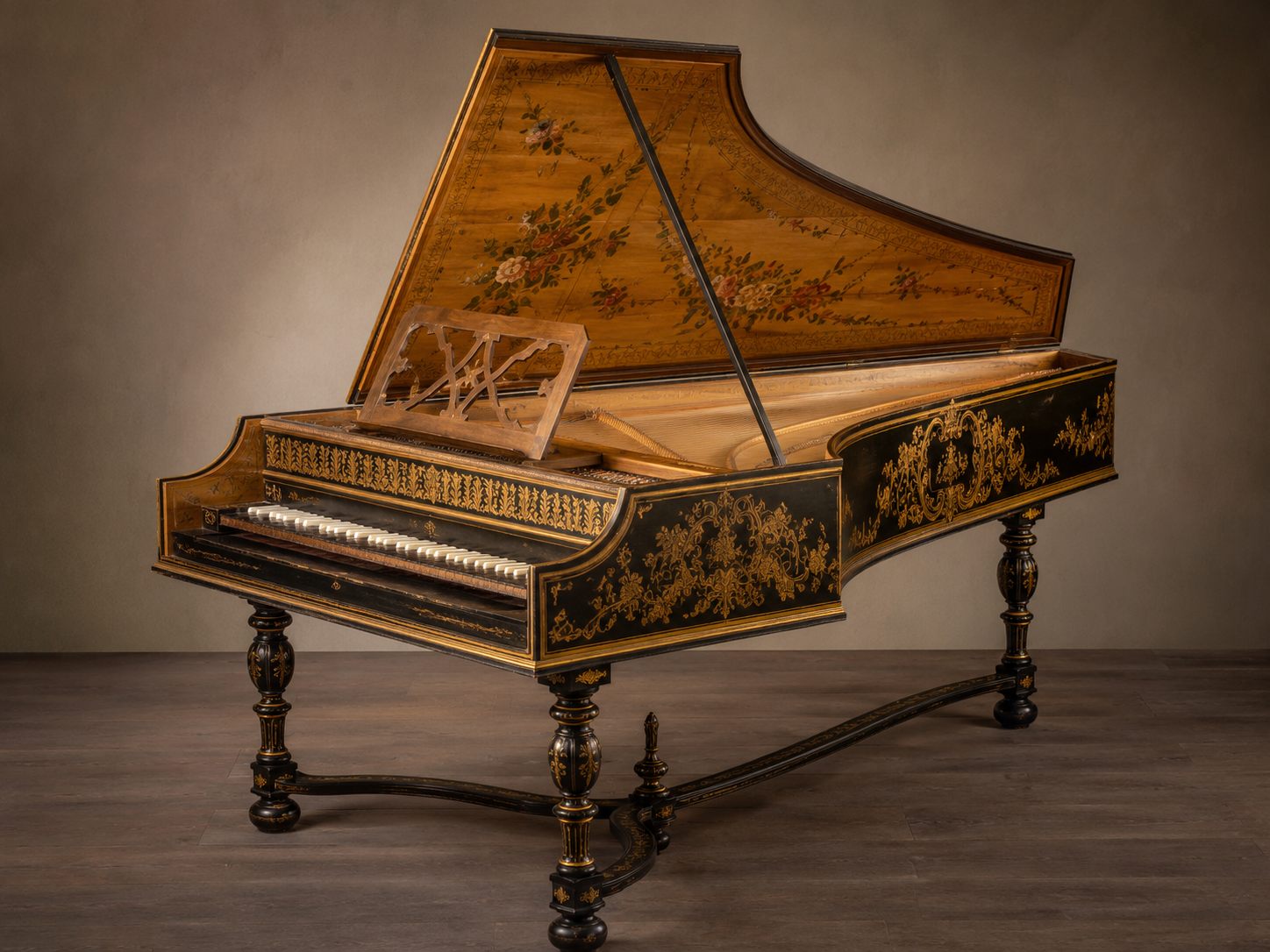
The piano evolved from older keyboard instruments, primarily the harpsichord and clavichord.
In the harpsichord, the strings are plucked, so the volume of each note is not directly dependent on the pressure applied to the key. The clavichord allowed for more expressiveness but produced a relatively quiet sound.
The key change was the design of the instrument, where hammers strike the strings. This allowed the pianist to control the volume of the tone with their touch, playing both softly and loudly.
This is also where the name pianofortecomes from, composed of the Italian words:
- piano – soft,
- forte – loud.
Over the centuries, the construction of the piano has continuously evolved. Instruments have received stronger frames, thicker and more tightly strung strings, a larger tonal range, and faster and more precise mechanics.
Today's piano is the result of a long development that combines tradition, acoustics, craftsmanship, precise mechanics, and modern materials.

Why does the piano have 88 keys?
Most modern pianos and keyboards have 88 keys: 52 white and 36 black. The tonal range extends from the lowest note A to the highest note C, covering just over seven octaves.
The first pianos did not have 88 keys. Their tonal range was smaller, but composers and pianists eventually needed more deep and high notes.
With the development of music and piano construction, the keyboard gradually expanded. Today's 88 keys represent an established standard that allows for the performance of almost the entire classical and modern piano repertoire.
Does a student need all 88 keys?
For the first steps, it is also possible to use an instrument with a smaller number of keys. For more serious and long-term learning, a digital piano or an acoustic instrument with 88 keys is generally recommended.
This is especially important when the student:
- attends music school,
- develops proper piano technique,
- plays pieces with a larger tonal range,
- wants to later transition to an acoustic piano or grand piano.
In addition to the number of keys, their feel is also important. If you are considering purchasing an electric piano, a weighted keyboard that closely mimics the resistance of an acoustic piano mechanism is recommended for learning.
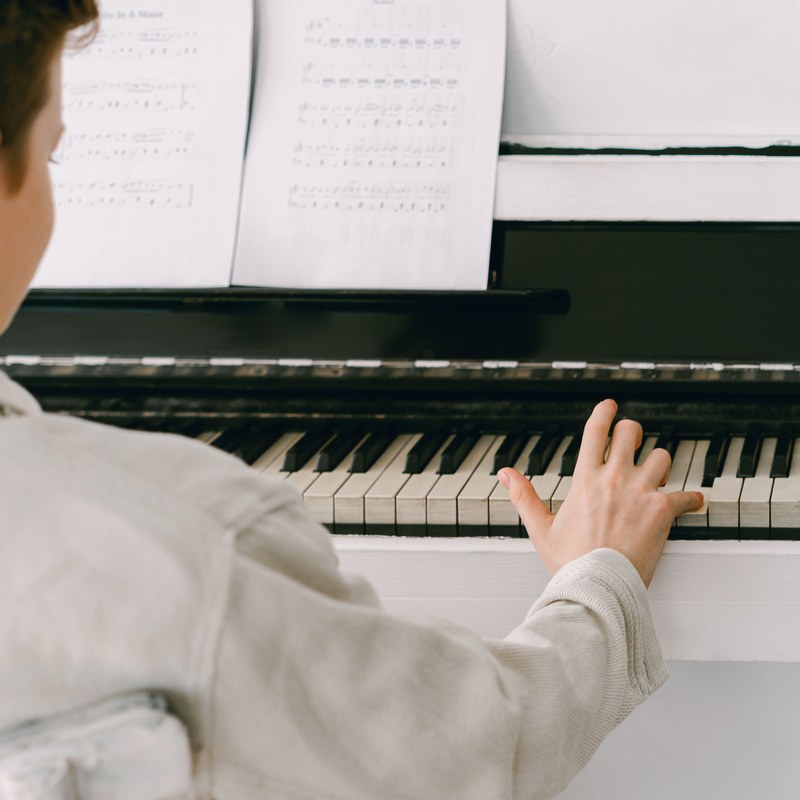
What does dynamics mean in piano playing?
Dynamics refers to the variation in volume and expressiveness while playing. A pianist can play the same note or melody softly, quietly, decisively, loudly, or dramatically.
In an acoustic piano, dynamics are directly related to the speed of the key. A faster press results in quicker hammer movement and a stronger strike on the strings. A slower press creates a quieter tone.
A pianist can shape dynamics:
- musical phrases,
- emphasis,
- tension and release,
- the mood of the piece,
- the difference between melody and accompaniment.
Good dynamics do not simply mean playing very loudly or very softly. It requires control over each finger, good listening, and an instrument that reliably responds to different touch techniques.
If the mechanism does not work evenly or the hammers are heavily worn, precise dynamic shaping becomes more difficult.
Why is the feel of the keys so important?
The feel of the keys influences the development of technique, sound control, and comfort while playing.
In an acoustic piano or grand piano, a key is not just an ordinary electronic switch. It is connected to the mechanics and the hammer, so the pianist feels under their fingers:
- the initial resistance of the key,
- the weight of the mechanics,
- the moment of the hammer's release,
- the depth of the key travel,
- the return motion of the key,
- the difference between soft and loud playing.
If the keys are too light, too heavy, slow, or uneven, the pianist finds it harder to develop proper technique. Therefore, it is important to choose a quality weighted keyboard for digital pianos.
A regular electronic keyboard with very light keys does not provide the same feel as a piano or grand piano. It may be suitable for certain uses, but it is not always the best long-term solution for learning piano technique.
A good key feel allows the pianist to:
- have better control over dynamics,
- play more evenly,
- have a more relaxed technique,
- repeat notes more accurately,
- express music more naturally.
Why does every piano sound different?
Every piano has a slightly different sound character because its sound is influenced by construction, natural materials, instrument preparation, and the space.
The most important factors are:
- the size of the instrument,
- string length and thickness,
- size and quality of the soundboard,
- construction of the body and frame,
- material and condition of the hammers,
- mechanics design,
- tuning,
- intonation,
- regulation,
- age and maintenance of the instrument,
- acoustics of the space.
Even two instruments of the same brand and model can sound slightly different. Wood is a natural material, so each soundboard has slightly different properties.
Differences can also arise due to wear of the hammers, the playing style of the previous owner, performed service interventions, and the conditions in which the instrument was stored.
How does the space affect the sound of the piano?
The space can significantly change the character of the instrument. A piano that sounds very loud or sharp in a smaller, empty space may sound more balanced and open in a larger, acoustically treated space.
The sound is primarily influenced by:
- size of the space,
- ceiling height,
- hard or soft flooring,
- curtains,
- carpets,
- upholstered furniture,
- larger glass surfaces,
- distance of the instrument from the walls,
- amount of items in the space.
Hard and empty surfaces reflect more sound, which can make the sound more pronounced, brighter, or even sharper. Soft materials absorb sound and can create a more subdued acoustic environment.
When choosing a piano or keyboard, we do not only evaluate the instrument but also the space in which it will be placed.
How to choose the right piano or keyboard?
Technical specifications, photos, and videos are helpful in the selection process, but they cannot fully convey the feel of the keys and the sound character of each instrument.
When testing, it makes sense to evaluate:
- whether you like the resistance of the keys,
- whether the keys respond evenly,
- how the instrument sounds when played softly,
- how it responds when played loudly,
- whether the sound is warm, bright, soft, or pronounced,
- whether the balance between bass, mid, and treble registers suits you,
- whether the size of the instrument fits the space,
- what its technical and service condition is.
A beginner often cannot assess all these characteristics on their own. Therefore, professional advice is welcome when choosing, and for a used instrument, an inspection by an experienced piano technician is also advisable.
Frequently asked questions about piano operation
Does the piano need electricity?
An acoustic piano and grand piano do not require electricity to create sound. The sound is produced mechanically, by hammers striking the strings and the vibration of the soundboard. Electricity may be needed for additional systems, such as built-in silent play systems, automatic play, or humidity control.
How many strings does a piano have?
A piano has more strings than keys, as most notes in the middle and high registers have two or three strings. The lowest bass notes typically have one thicker string. The total number depends on the model and construction of the instrument.
Why doesn't the hammer stay on the string after striking?
The hammer must immediately retract after striking so that the string can vibrate freely. If it remained resting on the string, its vibration would be dampened, and the tone would not sound normally. This is ensured by a precisely adjusted action mechanism in the piano.
Why does a piano go out of tune?
Tuning is most affected by changes in temperature and relative humidity. The wooden parts of the instrument slightly shrink and expand with environmental changes, affecting the tension of the strings. Stability is also influenced by transport, intense playing, and the time since the last tuning.
How often should a piano be tuned?
The frequency of tuning depends on usage, environment, and the stability of the instrument. For most home instruments, regular tuning at least once a year is advisable, while for intensive use, music schools, studios, and concert instruments, more frequent tuning is necessary.
Can an older piano still be of good quality?
Yes. Age alone does not provide enough information about the quality of the instrument. More important are the construction, brand, usage, storage conditions, regular maintenance, and the condition of the soundboard, strings, tuning pins, and action. Therefore, it is advisable to have an older instrument professionally inspected.
Is a digital piano suitable for music school?
A quality digital piano with 88 weighted keys can be suitable for starting and home practice. It is important that it has a good keyboard feel, proper dynamics, and a stable stand. For long-term technical development, regular playing on a well-maintained acoustic instrument is also beneficial.
What most affects the sound quality of a piano?
The sound quality is influenced by the construction of the instrument, the length of the strings, the soundboard, hammers, tuning, voicing, regulation, and the acoustics of the space. The pianist is also important, as touch, dynamics, use of pedals, and interpretation shape the final musical result.
Conclusion
A piano is much more than an instrument with black and white keys. It is a precisely crafted acoustic system where mechanics, wood, metal, felt, strings, and human touch come together.
When a pianist presses a key, a complex yet highly coordinated process is triggered inside the instrument. The hammer strikes the strings, the soundboard amplifies the vibrations, and the pianist shapes the final musical expression with touch, dynamics, use of pedals, and interpretation.
Understanding how a piano works helps with:
- choosing the right instrument,
- developing piano technique,
- identifying technical issues,
- proper maintenance,
- understanding the differences between individual instruments,
- developing ear training and a sense of sound.
When choosing a piano, grand piano, or digital piano, do not rely solely on the brand, appearance, or technical specifications. It is important how the instrument sounds, how it responds under your fingers, and whether it suits the pianist and the space it will occupy.
V Japan Piano Center we assist you in selecting a new or used piano, grand piano, or digital piano. We also offer professional tuning, regulation, voicing, servicing, maintenance, and safe transport of instruments.
Our goal is for every student, pianist, or music lover to find an instrument that allows for enjoyable playing, quality development, and long-term joy in music.