
Updated November 2026 — verified tips for choosing an instrument for children at Japan Piano Center.
First guitar for music school: 10 questions parents most often ask
The start of music school is something special for a child. For parents, however, a much more practical question often arises upon enrollment:
What kind of guitar should I buy?
Classical or acoustic? 1/2, 3/4 or 4/4? Is it sensible to buy a larger guitar right away so the child doesn't outgrow it? How much should one spend on a good beginner instrument? And what else does the child need besides the guitar?
At Japan Piano Center, we encounter such questions every day, so we have gathered answers to the most common questions parents have when buying their child's first guitar for music school.
1. Classical or acoustic guitar?
This is by far one of the most common questions.
If the child is enrolled in a program for classical guitar, they typically need a classical guitar with nylon strings.
A classical guitar is easiest to recognize by:
- nylon strings,
- a wider neck,
- a slightly different body shape,
- a softer feel of the strings under the fingers.
Acoustic or so-called western Guitars typically have metal strings and are more associated with pop, rock, country, and accompanying singing.
If you're unsure, it's always a good idea to check with your teacher before making a purchase.
You can find classical guitars by Yamaha HERE. All information about Yamaha guitars can be found on Yamaha's website.
2. What size guitar does a child need?
For children, the correct size of the guitar is extremely important.
A guitar that is too big makes it difficult for the child to maintain proper posture, reach the frets, and position their right hand. As a result, playing becomes harder, and the child may quickly feel that the guitar simply »doesn't work« for them.
The most common sizes are:
| Child's height | Approximate guitar size |
|---|---|
| up to about 125–130 cm | 1/2 |
| approximately 125–150 cm | 3/4 |
| approximately 150 cm and above | 4/4 |
This is just a guideline.
Two children of the same height may have different arm lengths, finger sizes, and body structures, so it's best for the child to actually hold the guitar and try it out.
You can read more about different guitar sizes HERE.
3. Can we buy a larger guitar so that the child won't outgrow it quickly?
We hear this question very often.
At first glance, it seems logical:
»Let's buy a 4/4, and he will be set for the next ten years.«
However, when learning an instrument, this is usually not the best decision.
A child finds it harder to position themselves correctly on an oversized guitar, struggles to reach individual notes, and uses significantly more energy to play.
For a beginner, it is much more important that the instrument is comfortable and suitable for their current size, than that it will still be usable in ten years.
The right size makes it easier for the child to take their first steps – and those first months of playing often determine whether the guitar becomes a joy or a chore.
4. Why do children's classical guitars have nylon strings?
Nylon strings are characteristic of classical guitars.
Compared to metal strings, they have:
- a softer feel under the fingers,
- a warmer sound,
- less tension,
- the characteristic sound of a classical guitar.
Especially for beginners, it is important that playing is not unnecessarily uncomfortable.
Fingers will still need some time in the first weeks to get used to pressing the strings – this is a completely normal part of learning the guitar.
5. What makes a good first guitar?
When choosing the first guitar, the most important thing is not that it is the most expensive.
What matters more is that:
it stays in tune, is comfortable to play, has the right string height, and is well-made.
A very cheap guitar may seem like an attractive choice at first glance, but a poorly made instrument can significantly hinder a child's learning.
If the strings are too high, they need to be pressed down hard. If the guitar doesn't stay in tune, the child struggles to develop their ear. If the frets or neck are poorly made, playing is simply less enjoyable.
For beginners, there is an interesting rule:
A good instrument won't play for the child – but it will allow them to learn to play more easily.

6. Which Yamaha guitars are suitable for beginners?
Yamaha has a long tradition of making guitars, and their range includes instruments specifically designed for beginners and younger students.
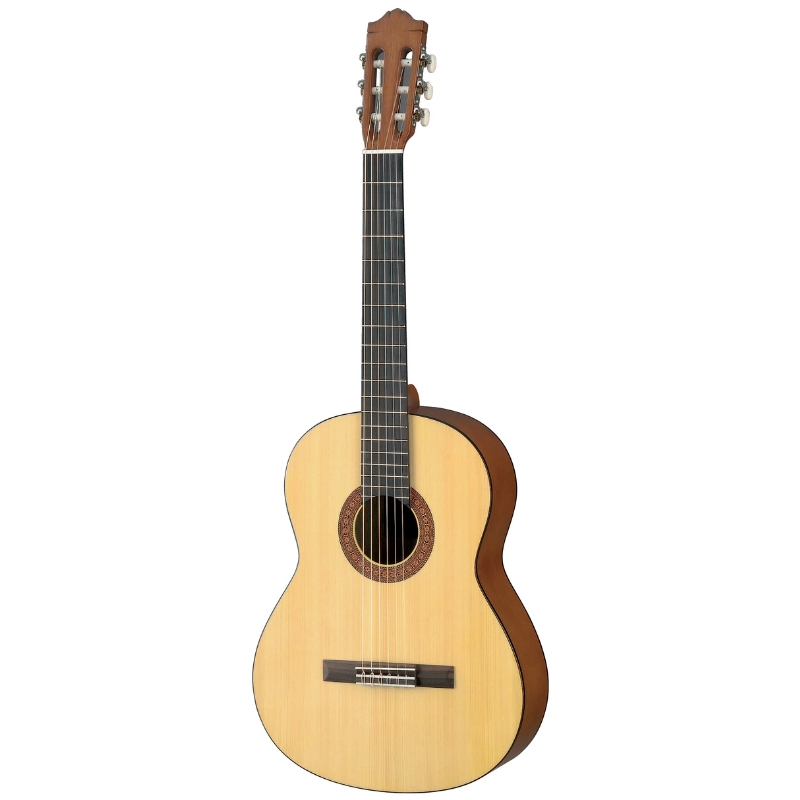
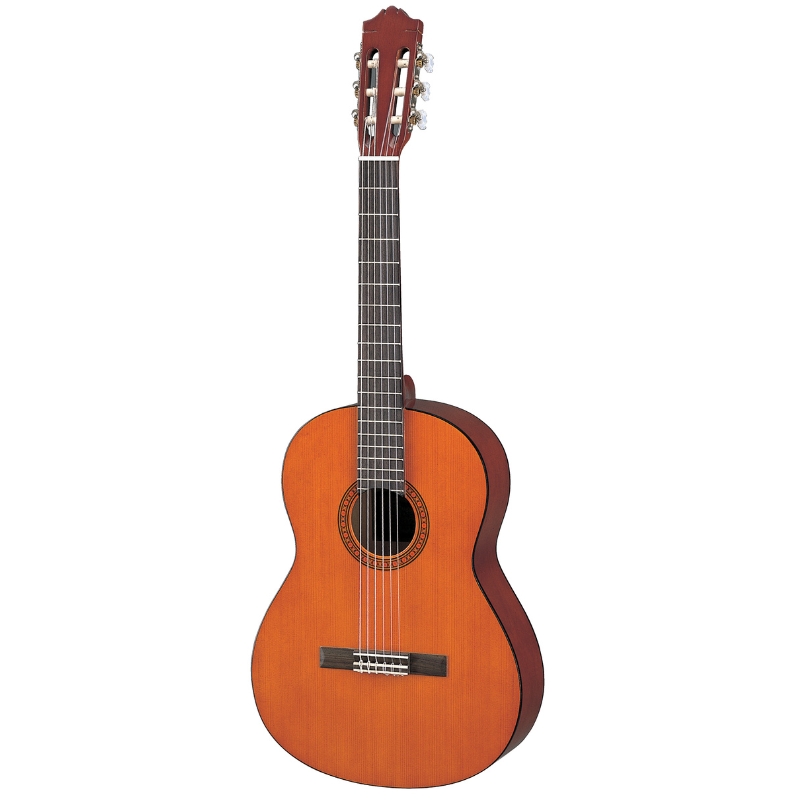
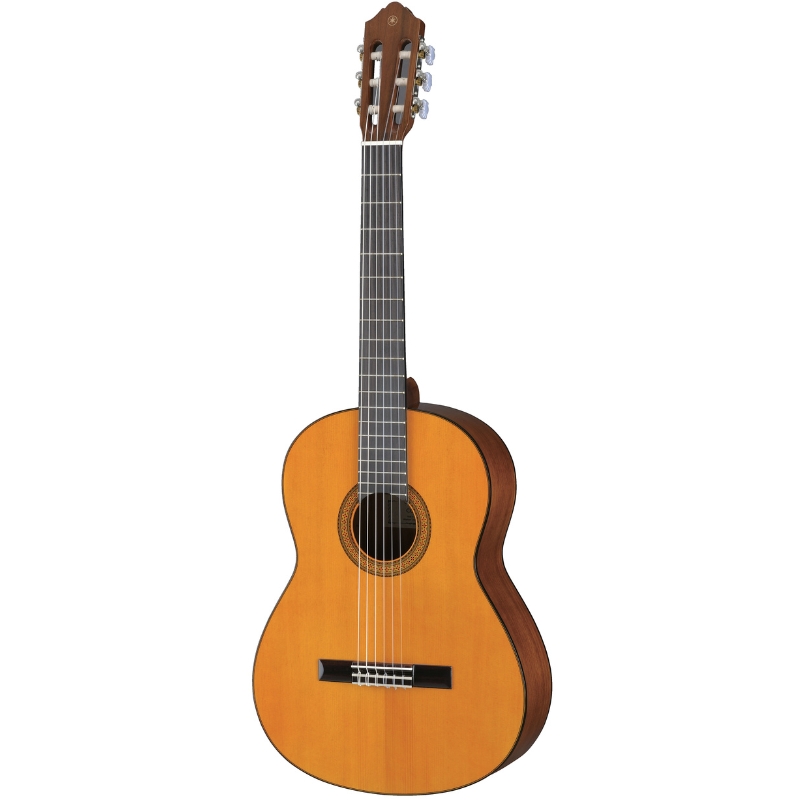
For younger children, an interesting option is Yamaha CS40II, a compact 3/4 size classical guitar designed specifically with younger players in mind.
For older children and beginners who need a full-size guitar, two of the most recognizable beginner models are Yamaha C40 and Yamaha C70.
For those who want to aim a bit higher with their first guitar, they can also look at Yamaha CGS102 or other models from the Yamaha CG.
The best choice is not always just a matter of the model. It is important to choose an instrument that fits the child's size, their program, and the teacher's recommendations..
7. Should we ask the guitar teacher before making a purchase?
Yes.
Teachers may have slightly different requirements and methods of work.
Some recommend a specific size of the instrument, a certain type of guitar support, or other accessories.
If the child has already received instructions from a music school or teacher, you can bring them with you to the store.
If you don't have recommendations yet, we can help you choose based on:
- the child's age,
- their height,
- arm length,
- hand size,
- the music school or program,
- the expected price range.
8. What else does the child need besides a guitar?
A guitar alone is usually not enough. To start, we mainly recommend:
A guitar bag
If the child carries the instrument to music school weekly, a good bag is almost essential. It protects the guitar from bumps, scratches, and weather conditions.
Tuner
The guitar must be properly tuned. Tuning is also one of the first things the child will gradually learn.
Footrest or guitar support
With a classical guitar, proper posture is very important. The teacher usually indicates what type of support they recommend.
Spare strings and picks
Strings and picks are consumables and need to be replaced occasionally.
Sheet music stand
Sheet music stand is very practical for home practice, as it allows for a more correct posture than notes placed on a table or bed.
9. Why does a new guitar keep going out of tune?
If you have just bought a new classical guitar and need to tune it every day – don't panic.
With new nylon strings, this is normal.
Strings stretch for a while after installation, so the guitar goes out of tune more often in the first days or period of playing.
Once the strings stabilize, the tuning will also be significantly more stable.
So frequent tuning of a new guitar does not necessarily mean there is something wrong with the instrument.
10. Is it better to order a guitar online or try it out with the child?
For an adult guitarist who knows exactly what they want, online shopping can be very easy.
For a child's first guitar, however, we recommend that the child, if possible, holds the instrument in their hands before purchasing..
In just a few minutes, we can often determine whether a 1/2, 3/4, or 4/4 guitar suits them better.
The child can sit in a playing position, hug the instrument, and try to reach the first frets.
This is much more reliable than choosing a guitar based solely on age.
The most important advice? Make it easier for the child to start.
When buying the first guitar, parents often focus primarily on the question: »How much should we spend?«
Perhaps a better question is: »Which guitar will the child find easiest and most enjoyable to practice on?«
The right size, a comfortable instrument, and quality craftsmanship can make a big difference.
There's no need to buy a professional concert guitar. It's also not sensible to choose an instrument that will make playing difficult for the child from the very first hour.
Are you looking for the first guitar for music school?
V Japan Piano Center We help you choose the appropriate size and model of guitar based on the child's age, height, and needs.
In our offer, you will find Yamaha classical and acoustic guitars for beginners, music school students, and more advanced players.
If you're not sure whether the child needs a 1/2, 3/4, or 4/4 guitar, bring them along.
It's much easier to choose a guitar when the child holds it in their hands.