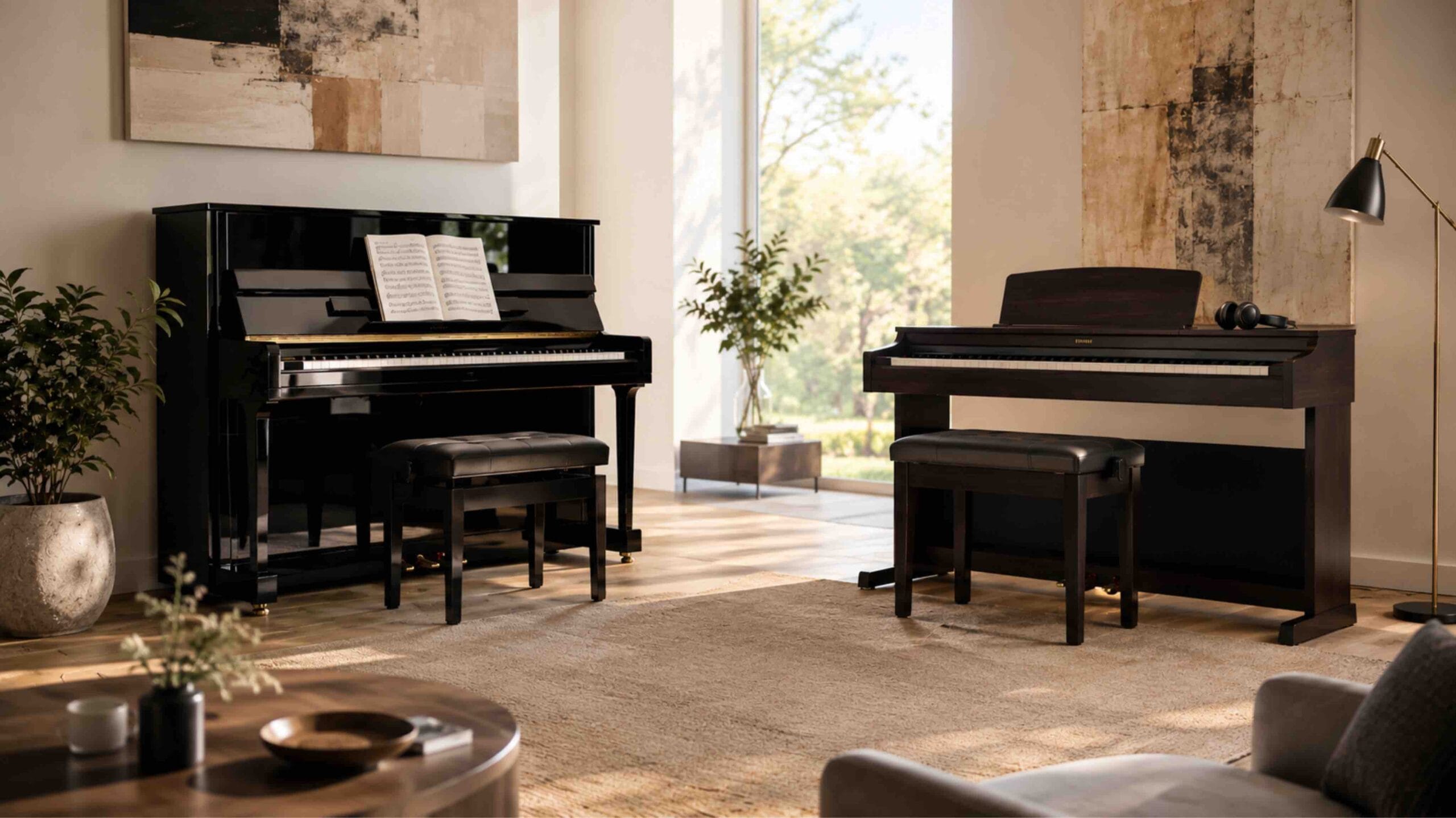
When a child, beginner, or adult student decides to learn the piano, an important question quickly arises: should they choose an acoustic piano or a digital piano? Both options have their advantages, so there is no single answer that applies to everyone. The right choice depends on space, practice methods, musical goals, playing feel, and of course, budget.
At Japan Piano Center, we encounter this question very often. Parents want to give their child a good start, adult beginners are looking for a practical instrument for home use, and music schools need reliable instruments that allow for proper technique development. Therefore, it is good to know the key differences between a piano and a digital piano.
What is a piano?
A piano is an acoustic instrument. The sound is produced mechanically: when a key is pressed, a hammer strikes the strings, and the soundboard creates a natural tone. This means that each key press is slightly different, and the sound responds to touch, force, speed, and playing style.
An acoustic piano is therefore a very good choice for students who want to develop a sense of tone, dynamics, and proper piano technique. With a piano, the player directly feels the connection between their fingers, the mechanics, and the sound, which is very important for long-term musical development.
A piano is suitable for music school students, more advanced beginners, and anyone who desires a natural piano feel and rich acoustic sound.

Advantages of an acoustic piano
The greatest advantage of a piano is the natural feel of playing. Since the sound is created mechanically, the instrument responds very accurately to touch. The student learns to listen to the difference between soft and loud tones, between gentle and firm pressure, and much more.
A piano also has a richer resonance. The sound spreads through the wooden casing, strings, and soundboard, giving the instrument a sense of “live” sound. This is especially important for children and students who want to develop a sense of quality tone from the very beginning.
An acoustic piano is an excellent choice for children attending music school, for students who want to progress more seriously, and for anyone who desires an authentic piano feel. Acoustic pianos can also allow for quiet practice/playing through headphones. More information about quiet playing options can be found HERE.
What is a digital piano?
A digital piano is an electronic instrument that mimics the feel and sound of an acoustic piano. Quality digital pianos have 88 keys, weighted keyboards, and sounds sampled from concert pianos.
Their great advantage is practicality. A digital piano allows for playing with headphones, does not require tuning, and usually takes up less space than an acoustic piano. Because of this, it is a very popular choice for apartments, beginners, children, and anyone who needs quiet practice.
Good digital pianos today offer a very pleasant playing feel, quality sound, and additional features such as a metronome, recording, various sounds, app connectivity, and the ability to practice with headphones.

Advantages of an electric piano
The electric piano is very practical. The biggest advantage is the ability to play with headphones. This is ideal for apartments, evening practice, or families where playing loudly is not always possible.
Another great advantage is that the electric piano does not need tuning. It always sounds the same, is not as sensitive to changes in humidity and temperature as an acoustic instrument, and is usually easier to move.
The electric piano is a good choice for beginners, apartments, and smaller spaces, practicing with headphones, adult beginners, and users who want additional features like recording, a metronome, or app connectivity.
What is better for a child?
If a child attends music school or has a serious interest in playing the piano, an acoustic piano is often the best long-term choice. It allows for natural development of technique, listening skills, and a sense of tone.
However, if the child is just starting, you don't have much space at home, or you need the option for quiet practice, a quality electric piano can be a very good solution. It is important that it has 88 keys, a weighted keyboard, and good responsiveness under the fingers.
A regular keyboard without weighted keys is not an equivalent substitute for a piano or a quality electric piano. When learning the piano, the feel under the fingers is very important, as the child develops technique, dynamics, and sound control from the very beginning.
We definitely recommend consulting with a piano teacher before purchasing or renting an instrument, as they can advise on what would be the best solution for your child based on their experience.
What about the price?
An electric piano is usually a more affordable entry into the world of piano, especially for beginners. However, attention should be paid to the quality of the keyboard. Very cheap instruments often do not provide the right feel under the fingers, which can limit progress in the long run.
A used acoustic piano can be an excellent choice if it has been professionally inspected, serviced, and properly prepared. When it comes to used pianos, it is very important not to decide solely based on appearance or price, but to check the condition of the mechanics, strings, soundboard, keys, ...
Therefore, it is good to think long-term when choosing. The cheapest instrument is not always the best choice, as a poor playing feel can quickly discourage a child from practicing. A good instrument can motivate them and allow for a more beautiful musical development.
Renting an instrument is definitely a good option to start with, as it allows your child to practice on a quality instrument from day one, while you avoid the high initial cost of purchase. Renting is an easy, flexible, and worry-free solution for families of young musicians.
Which option do we recommend?
For a child who attends music school or wants to play more seriously, we recommend a quality acoustic piano. If space, volume, or lifestyle do not allow for this, a quality electric piano is an excellent alternative.
For a beginner, the most important thing is that the instrument provides the right feel under the fingers, reliable tone, and joy in practicing. An instrument that excites a child or adult beginner to play is always a better choice than one that limits or discourages practice.
If you are not sure what the right choice is for you, it is best to try both instruments in person. The difference in feel, sound, and key response is something you can best experience while playing.
Conclusion
The piano and electric piano each have their advantages. The acoustic piano offers the most natural playing feel, rich sound, and an excellent foundation for developing piano technique. The electric piano, on the other hand, offers practicality, ease of use, and modern features that are very important for many families.
At Japan Piano Center, we help you choose an instrument based on the student's age, space, practice method, musical goals, and budget. Whether you are looking for a first electric piano, a quality used piano, or an acoustic instrument for serious learning, the most important thing is to choose a piano that will inspire the pianist to love music.