How does learning the piano affect a child's development?
Learning the piano for children is much more than just getting to know notes, rhythm, and melodies. The piano helps children develop concentration, fine motor skills, self-confidence, creativity, and perseverance. That is why many parents choose it as the first instrument for their child to enter the world of music.
At Japan Piano Center, we believe that music is one of the most beautiful companions in life. The piano not only aids a child's musical development but also helps shape habits that benefit them in school, daily responsibilities, and later in life.
Why is the piano a great choice for a child?
The piano is one of the most transparent and understandable instruments for beginners. The child sees all the notes in front of them, the keys are arranged clearly and logically, and the sound is produced immediately when they press a key. This allows the child to experience a quick sense of achievement, which is very important at the beginning of learning.
When playing the piano, the child simultaneously uses hearing, sight, touch, movement, memory, and thinking. Because of this, the piano is an exceptionally holistic instrument that encourages multiple areas of the child's development.
Learning the piano improves concentration!
When playing the piano, the child must listen to the tone, read the notes, follow the rhythm, and coordinate the movement of their hands. This requires focus and gradually develops the ability to concentrate.
Regular practice teaches the child that progress is achieved step by step. A piece that initially seems difficult becomes increasingly understandable with practice. The child learns that effort brings results.
This experience is very valuable outside of music as it helps the child with schoolwork, learning, and daily tasks.

The piano encourages the development of fine motor skills and coordination.
Playing the piano requires precise finger movements, coordination of the left and right hands, and a sense of pressure on the keys. The child learns to control the movement of their hands, wrists, and fingers, which positively impacts the development of fine motor skills.
For younger children, this is especially important as their motor skills are still developing. The piano helps them achieve better coordination, accuracy, and physical focus.
Music strengthens the child's self-confidence.
Every new piece, every successfully played excerpt, and every performance in front of a teacher or parents gives the child a sense of achievement. When the child sees that they are progressing with practice, their self-confidence grows.
It is important that the child does not feel too much pressure while learning. They must first experience music as something enjoyable. When they associate playing with joy, it will be much easier for them to develop discipline and perseverance.
The piano helps in expressing emotions.
Children often find it difficult to articulate what they feel. Music can help them with this. Through the piano, the child can express joy, peace, energy, tenderness, or sadness.
The piano offers a very wide range of sound. It can be soft and gentle or strong and pronounced. While playing, the child learns to listen to themselves, recognize moods, and develop a sense of musical expression.
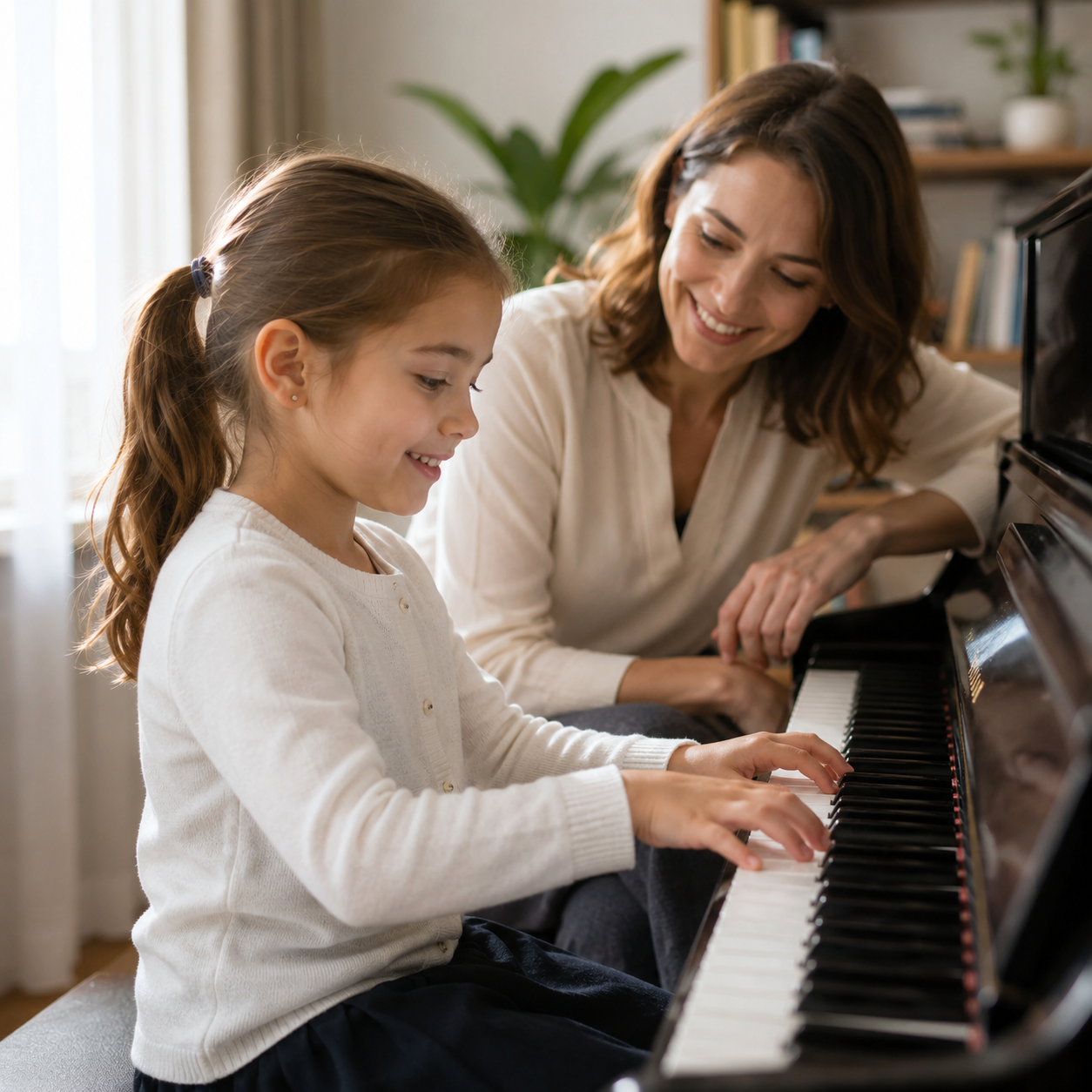
Learning the piano develops discipline and perseverance.
With the piano, the child quickly realizes that good results do not happen overnight. Progress requires practice, repetition, and patience.
This is an important life lesson. The child learns that with regular effort, they can overcome challenges and achieve their goals. This way of thinking can also benefit them in school, sports, and other activities.
The piano encourages creativity.
The piano is not just for playing well-known pieces. The child can explore sounds on it, create their own melodies, improvise, and develop their imagination.
This creative part is often what makes a child truly fall in love with music. When they realize they can create something beautiful themselves, it opens up space for play, exploration, and personal expression.
When is the right time for a child to start learning the piano?
The right time to start learning the piano depends on the child. Some children show interest very early, while others a bit later. It is important that the child enjoys music, has some focus, and a desire to explore sound.
For younger children, learning should be playful, relaxed, and age-appropriate. At the beginning, long practice sessions are not necessary. It is more important that the child practices regularly and with joy. Even 10 to 15 minutes of quality practice a day can be very beneficial for a beginner.
What piano should you choose for a child?
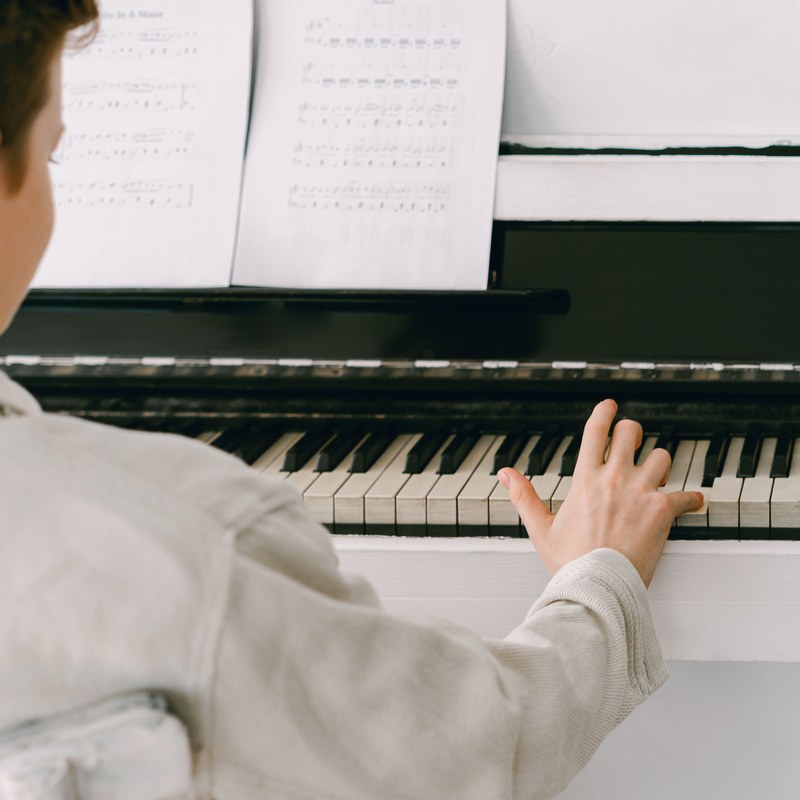
For a good start, it is important that the child plays an instrument that provides the right feel under their fingers and a beautiful sound. Parents often choose between an acoustic piano and a digital piano.
An acoustic piano offers the child a natural playing feel, rich tone, and direct contact with the instrument. A quality digital piano can be a good choice where quiet practice with headphones is important or where space is limited.
The most important thing is that the instrument has a weighted keyboard and appropriate key response. This helps the child develop proper technique, dynamics, and a sense of tone.
If you are unsure which instrument is most suitable for your child, it is a good idea to consult a professional. The right choice of instrument can make the child's first steps easier and make learning the piano much more enjoyable.
Frequently asked questions by parents
Is the piano a suitable first instrument for a child?
Yes. The piano is a very suitable first instrument because it has a clear arrangement of tones, and the child immediately hears the result when pressing a key. This makes it easier to understand the basics of music, melody, and rhythm.
How much time should a child practice the piano daily?
At the beginning, 10 to 15 minutes of regular practice a day is sufficient. More important than the length of practice is that the child practices with focus, relaxation, and regularly.
Is an acoustic piano better than a digital piano?
Both options can be good, depending on the space, needs, and goals. An acoustic piano offers the most natural playing feel, while a quality digital piano provides additional sound options, app usage, fun content for playing, quiet practice with headphones, and is practical for apartments.
When should you buy the first piano for a child?
It makes sense to buy the first piano when the child shows interest in music and starts regular learning. A good instrument at home greatly facilitates practice and progress.
Conclusion
Learning the piano positively impacts a child's development. It helps them develop concentration, coordination, perseverance, self-confidence, creativity, and a sense of music.
The best part about learning the piano is that the child discovers their world through music. Every melody played is a small step forward – not only in music but also in personal development.
V Japan Piano Center We are happy to assist parents in choosing the right piano or digital piano for their child. With professional advice, a wide selection of instruments, and experience in the field of pianos, we help you find an instrument that will provide your child with a pleasant and high-quality start to their musical journey.